Feet · Review · Updated September 12, 2026
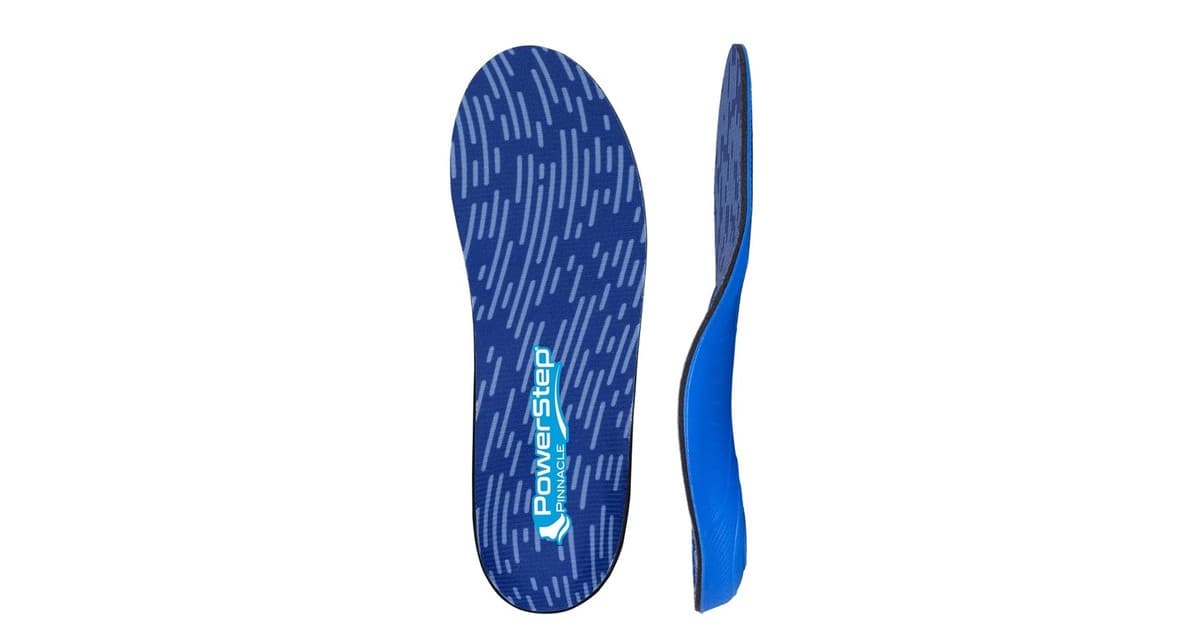
A semi-rigid arch-support insole: what the firm shell changes, and for whom
Some links on this page go to Amazon. If you buy through one, this site earns a commission at no extra cost to you. It does not change what gets recommended, and nothing here is paid placement. Affiliate Disclosure.
Liked
- Firm arch shell keeps its shape for months, not weeks
- Deep heel cradle stops the foot sliding forward
- Full length, so it replaces the stock insole instead of stacking on it
Keep in mind
- Arch feels high for the first days
- Too thick for slim or low-volume shoes
- Top fabric wears sooner than the shell
#ad · As an Amazon Associate we earn from qualifying purchases.
Best for
- Long shifts on concrete in sneakers or work boots
- Flat-footed walkers who want support, not padding
- Replacing a stock insole that has packed flat
Skip it if
- The shoes are slim dress shoes or minimalist running shoes
- A soft, cushioned feel is the whole point
- Custom orthotics are already in the shoe
What a semi-rigid shell does
Most stock insoles are a slab of foam: they cushion for the first weeks and then pack down to a thin, shapeless sheet. A semi-rigid insole is built the other way round. A firm plastic shell runs under the arch and around the heel, and a thin layer of foam sits on top of it. The shell does the supporting; the foam only takes the edge off.
The difference shows up over a long day: foam settles further as it warms and compresses, while a shell holds the same shape at the end of the shift as at the start. That is the whole argument for the design, and also why it feels firmer than people expect.
Fit and shoes
It is full length, so the stock insole comes out and this one goes in its place. Sneakers, walking shoes and work boots with a removable insole usually take it without trimming; where a shoe runs narrow, the toe can be trimmed along the printed guide. Dress shoes, cleats and low-volume shoes rarely have room for it, and forcing it in lifts the heel out of the shoe.
The heel cradle is deeper than on a flat insole. It keeps the heel centered on the shell, which is what stops the arch support drifting off to one side during the day.
The first week
Owners commonly describe the arch as noticeable, even a little intrusive, for the first few days: the shell doing its job before the foot has settled onto it. The usual advice is to wear it an hour or two at a time and build up rather than starting with a full day. If it still feels wrong after a couple of weeks, the arch height is probably not right for that foot, and a lower-profile model is the better fit.
Before buying
Check the size chart against the shoe size rather than guessing; each insole size spans more than one shoe size, and only the toe can be trimmed. Read the listing for the current cover fabric and whether it is the full-length or the three-quarter version. Give it a week of short wears before deciding.
Questions people ask
Does it fit in running shoes?
- Usually, if the stock insole is removable. It is thicker than a stock insole, so shoes that already fit snugly may feel tight with it in.
Can it be trimmed?
- Only the toe area, along the printed guide. The arch shell and heel cradle are fixed.
How long does it last?
- The shell outlasts a foam insole by a wide margin. The top fabric usually wears first; the listing carries the maker’s guidance on replacement.
#ad · As an Amazon Associate we earn from qualifying purchases.
Links to Amazon on this page are affiliate links, which is how the site pays for itself. Prices and availability are not shown here because they change; check the listing. Affiliate Disclosure.